
Ice Making Equipment Manufacturer Quality First, Innovating in Refrigeration & Ice Making


-
+86 180 4692 4866
-
Popular Searches:Ice Maker, Flake Ice Machine, Block Ice Machine, Cube Ice Machine, Tube Ice Machine
Ice Making Equipment Manufacturer Quality First, Innovating in Refrigeration & Ice Making
+86 180 4692 4866
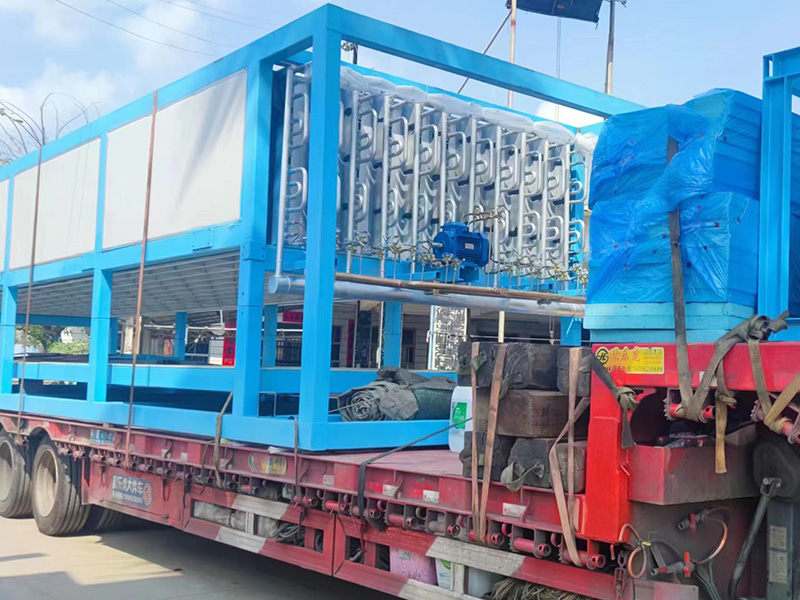
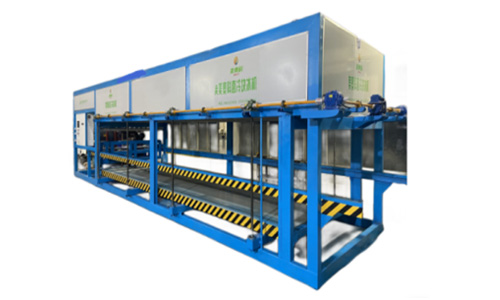
In the field of industrial ice making, direct-cooling block ice machines and flake ice machines are the two most widely used types of ice-making equipment. They differ significantly in ice-making principle, ice shape, structural characteristics, production efficiency, and application scenarios. Users should select based on their production requirements. The first difference lies in the ice-making principle. Direct-cooling block ice machines adopt a direct evaporative heat exchange mode, where water freezes through direct contact with the evaporator plate without any intermediate heat transfer medium, and ice release is achieved via hot gas defrost. In contrast, flake ice machines typically use a drum-type external scraping structure, where ice continuously forms on the drum surface and is scraped off by an external blade, operating in a continuous dynamic ice-making mode.
The ice shape and physical properties are distinctly different. Direct-cooling equipment produces uniform solid block ice with high density, hardness, and slow melting, offering long storage life, minimal internal bubbles, high clarity, and strong compressive strength — ideal for extended stacking and long-distance transport. Flake ice machines produce thin, flat ice with large surface area and loose texture, which provides rapid cooling due to its broad contact area and fast melting rate, but it is not suitable for long-term storage, is prone to clumping, and cannot be stacked for extended periods. The production modes also differ: block ice machines operate on a batch cycle, releasing ice at set intervals, while flake ice machines can deliver continuous 24-hour output at a faster rate.
Equipment operating conditions and suitable applications also vary. Direct-cooling block ice machines offer stable energy consumption, low ice loss, simple maintenance, and are well-suited for cold-chain warehousing, seafood preservation, long-haul transport, and large-scale cooling applications. Flake ice machines excel in instantaneous cooling and are widely used in concrete mixing, chemical cooling, rapid food pre-cooling, and slaughterhouse processing — industries that demand extreme rapid cooling. Additionally, the scraper blades on flake ice machines are consumable parts that wear faster under high-frequency operation, requiring more frequent maintenance, while direct-cooling block ice machines have no easily worn scraping components, resulting in longer overall service life and higher operational stability.
 中文站
中文站
 English