
Ice Making Equipment Manufacturer Quality First, Innovating in Refrigeration & Ice Making


-
+86 180 4692 4866
-
Popular Searches:Ice Maker, Flake Ice Machine, Block Ice Machine, Cube Ice Machine, Tube Ice Machine
Ice Making Equipment Manufacturer Quality First, Innovating in Refrigeration & Ice Making
+86 180 4692 4866
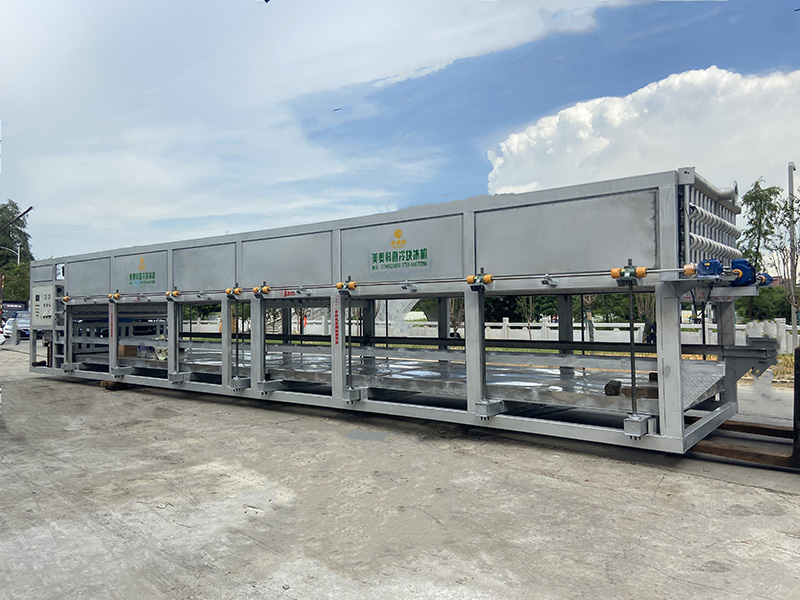
In long‑term industrial operation, the most common issue with direct‑cooling block ice machines is slowed ice production and failure to meet daily output targets. Most users mistakenly attribute this to equipment aging or failure, but in most cases it is caused by inadequate routine maintenance or improper operating conditions, and can be resolved through targeted troubleshooting. The first cause is abnormal heat dissipation. Direct‑cooling block ice machines rely on the condenser for heat rejection to complete the refrigeration cycle. If the equipment is placed in a poorly ventilated, high‑temperature workshop area, and the condenser surface becomes clogged with dust, oil, or lint, heat dissipation is directly compromised. This raises the unit's high‑side pressure and significantly reduces compressor efficiency, substantially lengthening the ice‑making cycle. This effect is particularly pronounced in summer when high ambient temperatures amplify the performance loss caused by poor heat dissipation, and in severe cases, may trigger high‑pressure alarms and intermittent shutdowns.
The second factor involves water quality and scaling. When equipment is used for extended periods without regular descaling, a heavy buildup of scale and mineral deposits accumulates on the evaporator plate, water piping, and filter internals. This not only restricts water flow and causes unstable feed water supply but also reduces evaporator heat exchange efficiency, slowing the heat transfer between water and refrigerant, resulting in uneven ice thickness and extended freezing times. At the same time, substandard feed water quality and excessive impurities in the water source accelerate piping blockages, indirectly affecting ice production efficiency. Additionally, refrigerant abnormalities are a key contributing factor. Minor refrigerant leaks, insufficient refrigerant charge, or improper refrigerant mixture ratios can result in insufficient refrigeration cycle pressure. The evaporator plate temperature may fail to reach required levels, leading to reduced ice coverage area and a decline in batch output.
To address these issues, a regular maintenance routine should be established. Clean the condenser surface of dust and debris periodically, ensure adequate ventilation around the equipment, and avoid placement near heat sources or direct sunlight. Clean the water filter monthly, and perform professional descaling of the evaporator plate and water system quarterly to maintain unobstructed flow and efficient heat exchange. At the same time, regularly test the refrigeration system pressure, inspect piping for leaks, and replenish refrigerant of the correct type as needed. These measures stabilize ice production efficiency at the source and ensure the equipment operates at full capacity reliably.
 中文站
中文站
 English